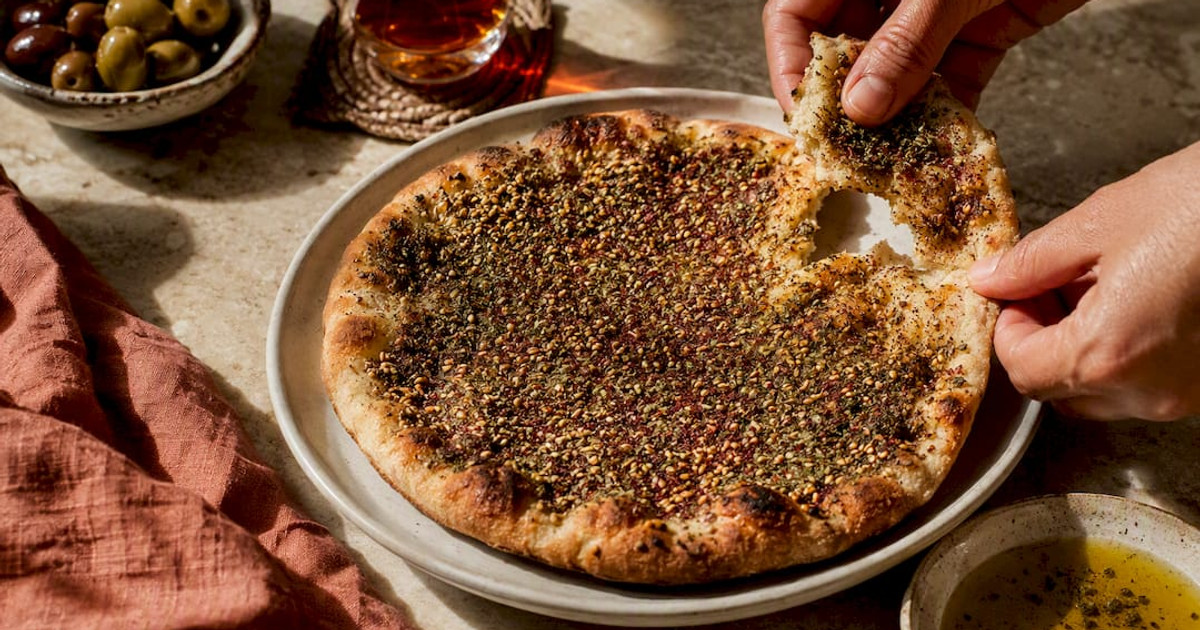
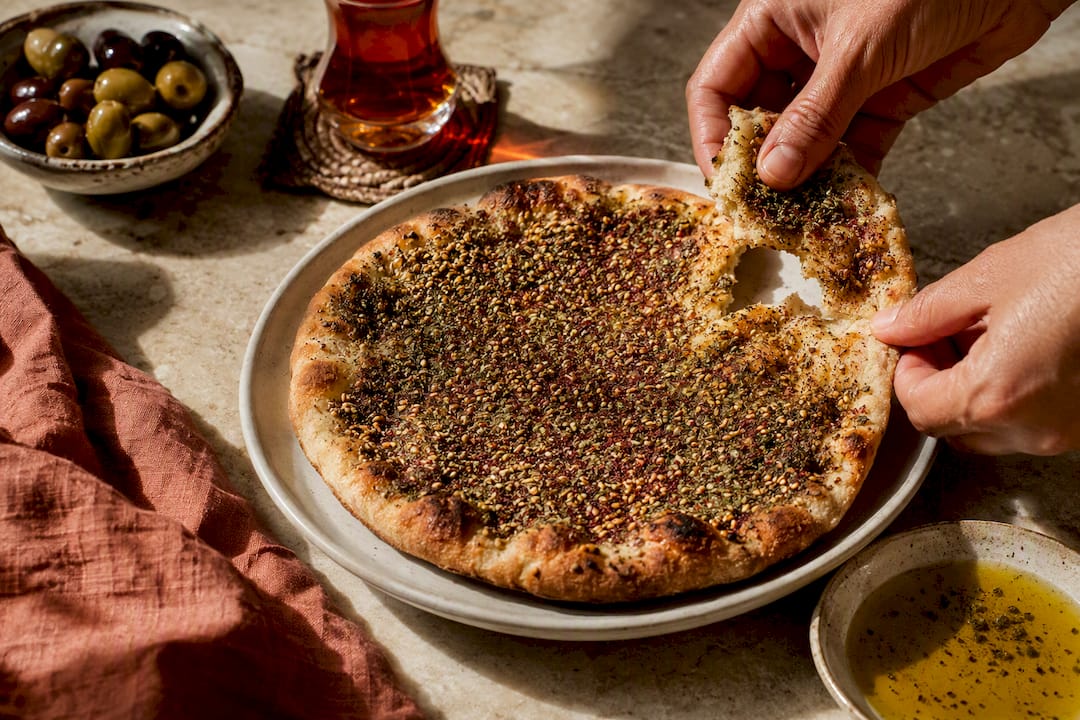
Za’atar is a Middle Eastern herb and spice blend made from dried wild thyme or oregano type herb, toasted sesame seeds, sumac, and salt. It works as a dip mixed with olive oil for bread, a finishing sprinkle on eggs and hummus, a rub or marinade for chicken and vegetables, and a mix-in for dairy, grains, and baked goods.
TL;DR:
-
Toasted sesame seeds enhance flavor and texture, and toasting them before mixing with other ingredients is highly recommended.
-
Bloom za’atar by gently warming it in olive oil to release aromatic compounds without scorching the herbs or sesame.
-
Use standardized ratios, such as one part za’atar to two or three parts olive oil for dips, or a tablespoon per chicken piece for roasting.
-
Be cautious with high-salt or long marinade contacts, especially with delicate fish, to avoid overly curing or flavor overpowering dishes.
-
Choose authentic, regionally sourced za’atar or make your own with dried thyme, sumac, toasted sesame, and salt, avoiding fillers or anti-caking agents.
Table of Contents
Quick, high-impact ways to use za’atar
If you keep a jar of za’atar in the pantry, you already have a shortcut to five or six different dishes. The traditional starting point is za’atar wu zayt: olive oil and za’atar served together for dipping bread, and the same combination pressed onto dough to make man’oushe, the popular Middle Eastern flatbread. Beyond that ritual, the blend earns its place as a finishing seasoning and a rub.
-
Mix with olive oil for bread dipping or spread it on dough before baking man’oushe.
-
Sprinkle over fried or soft-boiled eggs, avocado toast, hummus, or labneh right before serving.
-
Rub onto chicken, fish, or root vegetables before roasting or grilling.
-
Fold into softened butter, breadcrumbs, or a grain salad for a quick flavor boost.
-
Toss with warm popcorn instead of standard salt and butter seasoning.
Sesame seeds are one of the blend’s defining textures, and a few extra seconds in a dry pan before mixing makes a real difference.
Pro Tip: Toast sesame seeds briefly in a dry pan before blending or buying a mix with pre-toasted seeds. When roasting vegetables or meat, add za’atar in the final few minutes, or premix it with oil first, so the herbs do not scorch.
How to bloom za’atar without burning it
Za’atar behaves differently depending on whether it hits heat directly or gets mixed into oil first. Warming the blend gently in olive oil, a technique often called blooming, releases aromatic compounds and spreads the flavor more evenly than sprinkling it dry over a hot pan, according to one seasoning-focused guide. The oil also acts as a buffer that protects the thyme and sesame from scorching.
-
Warm two to three tablespoons of olive oil per tablespoon of za’atar over low heat for about 30 to 60 seconds.
-
Remove the pan from heat before stirring in the za’atar, then use it as a drizzle or a spreadable paste.
-
For a dry finish instead, add za’atar off the heat or in the last minute of cooking to preserve its color and aroma.
-
When marinating proteins, keep salty, sumac-heavy rubs on the surface for 15 to 30 minutes for fish, longer for chicken or lamb, since salt draws out moisture over time.
Long marinades with a salt-forward blend can make delicate fish taste overly cured, so shorter contact times work better there than they do for heartier cuts.
Pro Tip: Reserve high heat for the protein or vegetable itself, and treat za’atar as a finishing layer added late or blended into oil first.
Recipe templates you can use today
These ratios are starting points, not fixed formulas, and they scale easily for a crowd or a single plate.
-
Za’atar olive oil dip: stir one part za’atar into two to three parts olive oil and serve alongside warm bread.
-
Sheet-pan za’atar chicken: coat chicken pieces with a tablespoon of za’atar per piece mixed into a little oil, then roast at a moderate oven temperature until cooked through.
-
Za’atar yogurt dip: blend a tablespoon of za’atar into a cup of thick yogurt or labneh, then swirl olive oil on top before serving.
-
Za’atar compound butter: mash a tablespoon of za’atar into four tablespoons of softened butter for finishing grilled vegetables or warm bread.
-
Grain toss vinaigrette: whisk za’atar into a basic olive oil and lemon vinaigrette, then fold through cooked grains like bulgur or farro.
-
Za’atar popcorn: toss warm popcorn with melted butter and a spoonful of za’atar for a quick snack.
-
Seasoned breadcrumbs: mix za’atar into breadcrumbs for a crust on baked fish or chicken.
Each of these leans on the same base ratio logic: a spoonful of za’atar changes the character of a dish without overwhelming it, as long as you taste and adjust before serving.
Sesame safety, sourcing, and storage tips
Because za’atar contains sesame seeds, it deserves a closer look at labels. Sesame became the ninth major allergen recognized under United States law when the FASTER Act took effect, meaning packaged foods that contain sesame must declare it clearly. If you are cooking for a household with a sesame allergy, check the label for a “Contains: sesame” statement or review the ingredient list directly.
Imported sesame seeds have been linked to contamination incidents, including Salmonella and pesticides, prompting recalls and tighter import controls, according to a food safety review of sesame seed supply chains. Buying from a reputable brand rather than an unlabeled bulk bin lowers that risk.
-
Store za’atar in an airtight container in a cool, dark cabinet away from direct light.
-
Refrigerate large batches if you buy in bulk to preserve the herbs’ aroma longer.
-
Use it in moderation since the blend already carries added salt.
-
Skip it entirely, or make a sesame-free version, for anyone with a diagnosed sesame allergy.
How to choose or make your own za’atar blend
A well-made za’atar balances four core ingredients: dried wild thyme or a related oregano family herb, sumac for tang, toasted sesame seeds for crunch, and salt to tie it together. Some regional versions add cumin, coriander, or marjoram for a different profile, and household recipes vary from one Palestinian family to the next.
If you want to blend your own, a simple starting ratio is two parts dried thyme or oregano to one part sumac and one part toasted sesame, with salt added to taste. Toast the sesame separately before mixing so it does not turn bitter, and crush the dried herb lightly to release its oils.
-
Check that sumac, not citric acid, provides the tartness.
-
Look for visibly toasted sesame seeds rather than raw pale ones.
-
Favor blends with a short ingredient list and no fillers or anti-caking agents.
-
Substitute dried oregano or thyme if wild thyme is unavailable, understanding the flavor will be slightly less complex.
Why za’atar matters in Middle Eastern food culture
Za’atar carries more weight than a typical spice jar suggests. In Palestinian and broader Levantine households, mixing za’atar with olive oil and serving it with warm bread is a daily ritual rather than an occasional treat, often appearing at breakfast alongside olives, cheese, and tea. Man’oushe, the flatbread topped with a za’atar and oil paste, is sold from bakeries and street stalls across the region and eaten at any time of day.
The herb itself, often wild thyme from hillsides and terraces, has been foraged and cultivated across Palestine, Jordan, Lebanon, and Syria for generations, which is part of why the blend is tied so closely to place and memory for people with roots in the region. Recipes and exact ratios shift from one family kitchen to the next, and the blend is frequently given as a gift or brought back from a trip home, carrying meaning well beyond its use as a seasoning.
That heritage explains why sourcing matters to people looking for an authentic version rather than a generic supermarket substitute. The herb, the sumac, and the way they are combined reflect a specific agricultural and culinary tradition, not just a flavor profile that can be reproduced with any dried herb on hand.

What za’atar offers nutritionally
Za’atar is used in small amounts, so it functions more as a flavor and texture booster than a significant source of nutrients on its own. Thyme and sumac both come from plants long used in traditional Mediterranean and Middle Eastern cooking for their aromatic and tart qualities, while sesame seeds contribute healthy fats, some protein, and a distinctive crunch.
Because the blend usually includes added salt, it is worth using it as a seasoning rather than pouring it on freely, particularly for anyone watching sodium intake. Olive oil, the near-universal partner to za’atar in traditional dipping, adds monounsaturated fat and is a staple of Mediterranean diets more broadly.
The combination of herbs, sumac, sesame, and olive oil reflects long-standing food patterns from the region rather than a modern health trend, and its appeal for many home cooks is as much about flavor and tradition as it is about any specific nutritional claim.
A note on flavor, heritage, and getting it right
Good za’atar is a study in balance: sumac’s tartness, sesame’s crunch, thyme’s earthiness, salt’s edge. Getting that balance right depends on the quality of the ingredients going in, not just the ratio.
Palinova specializes in natural wellness products made from authentic Palestinian botanicals, including a distinct range of essential oils and skincare solutions free from synthetic additives, which shapes how closely the brand pays attention to sourcing across its food line as well. If you share a kitchen with someone who has a sesame allergy, treat that as a real constraint, not an afterthought: read labels, ask questions, and keep a sesame-free seasoning on hand as a backup.
— abdelmuhsen
Where to find an authentic za’atar blend
Palinova offers its own Za’atar (Origanum Syriacum) as a direct option for readers who want a blend rooted in traditional Palestinian sourcing rather than a generic supermarket jar. It fits every use covered above, starting with the simplest one: warm bread, good olive oil, and a spoonful of za’atar stirred in.
-
Try it first as a dip: za’atar wu zayt with warm bread is the fastest way to taste the blend as intended.
-
Move on to eggs, hummus, or roasted vegetables once you know the flavor.
-
Browse the wider Palestinian food category for other traditional pantry staples.
Pro Tip: Keep a small dish of olive oil and za’atar on the table the way it is served traditionally, and let people mix their own ratio.
Visit the Za’atar product page to order, or explore the full Palinova shop for essential oils, seed oils, and skincare made from the same botanical heritage.
Sources
FAQ
What does za’atar do to your body?
Za’atar itself is a seasoning eaten in small amounts, so it mainly adds flavor rather than delivering a specific effect on the body. Its ingredients, thyme, sumac, sesame, and salt, are drawn from foods long used in Mediterranean and Middle Eastern cooking, but za’atar is not a supplement or remedy.
Should za’atar be refrigerated?
Za’atar keeps well in an airtight container in a cool, dark cabinet for everyday use. Refrigerating it can help preserve aroma and freshness for longer if you buy in bulk or do not use it often.
Can I eat za’atar every day?
Yes, many households eat za’atar daily, most commonly mixed with olive oil for dipping bread at breakfast. Because the blend contains added salt, it is worth using it as a seasoning in reasonable portions rather than in large quantities at every meal.
How do you eat za’atar?
The most traditional way is za’atar wu zayt: mixing it with olive oil and dipping bread, or spreading the mixture onto dough to bake man’oushe. It also works sprinkled over eggs, hummus, or labneh, rubbed onto chicken or vegetables before roasting, or mixed into popcorn as a snack.
Recommended
Preguntas frecuentes
What does za'atar do to your body?
Za'atar itself is a seasoning eaten in small amounts, so it mainly adds flavor rather than delivering a specific effect on the body. Its ingredients, thyme, sumac, sesame, and salt, are drawn from foods long used in Mediterranean and Middle Eastern cooking, but za'atar is not a supplement or remedy.
Should za'atar be refrigerated?
Za'atar keeps well in an airtight container in a cool, dark cabinet for everyday use. Refrigerating it can help preserve aroma and freshness for longer if you buy in bulk or do not use it often.
Can I eat za'atar every day?
Yes, many households eat za'atar daily, most commonly mixed with olive oil for dipping bread at breakfast. Because the blend contains added salt, it is worth using it as a seasoning in reasonable portions rather than in large quantities at every meal.
How do you eat za'atar?
The most traditional way is za'atar wu zayt: mixing it with olive oil and dipping bread, or spreading the mixture onto dough to bake man'oushe. It also works sprinkled over eggs, hummus, or labneh, rubbed onto chicken or vegetables before roasting, or mixed into popcorn as a snack.