

For a fast mental boost, try rosemary or peppermint essential oil in a short diffuser session, 20 to 45 minutes, then pause. Rosemary’s active compound, 1,8-cineole, correlates with improved memory and attention, while peppermint has shown measurable gains in controlled human trials. The evidence is encouraging but preliminary, so treat these oils as a supplement to good habits, not a substitute, and follow FDA safety guidance when using them.
TL;DR:
-
Rosemary and peppermint oils show some evidence of improving immediate attention and memory performance, but high-quality, large-scale human studies are limited.
-
Diffuser sessions of 20 to 45 minutes cycling regularly are recommended to maintain scent effectiveness and prevent olfactory fatigue.
-
Oils should be properly diluted, and safety precautions must be followed, especially around children, pets, pregnant individuals, and those with respiratory conditions.
-
Citrus oils like lemon and bergamot are better suited for quick alertness boosts rather than sustained focus, while eucalyptus can help clear congestion that hampers concentration.
-
Aromatherapy should complement, not replace, standard medical guidance, and consulting a professional can optimize safe and effective use.
Table of Contents
-
Top essential oils for focus: quick profiles and when to use each
-
How to use oils for focus: diffuser recipes, inhalers, roller blends, and timing
-
Safety essentials: dilution, allergies, kids and pets, and regulatory cautions
-
What the research shows and what it doesn’t: rosemary, peppermint, and evidence quality
Top essential oils for focus: quick profiles and when to use each
Different oils suit different kinds of focus. Some sharpen alertness for a quick task, others support longer stretches of calm concentration, and a few work best for very specific situations.
Rosemary is the most studied oil in this category. Its main active compound, 1,8-cineole, has been linked in clinical research to improved memory speed and cognitive task performance, with higher plasma cineole levels tied to better outcomes in some trials. It works well before a study session or a task that demands recall.
Peppermint brings menthol and menthone into the mix. A randomized, placebo-controlled trial found that a higher dose of peppermint oil improved performance on a demanding attention task at one and three hours after exposure, and reduced how fatigued participants felt. It suits mid-afternoon slumps or long meetings where attention tends to drift.
Citrus oils like lemon and sweet orange, along with bergamot, offer a brighter profile. They are typically used for short bursts of alertness rather than sustained concentration, making them a good match for a quick reset between tasks.
A few oils serve narrower roles: eucalyptus is often reached for when congestion is clouding focus, lemongrass offers a grounding, herbal note some people use for sustained calm, and cedarwood leans woodsy and settling rather than stimulating.
Matching oils to the task helps:
-
Study sessions: rosemary, alone or paired with peppermint.
-
Creative work: citrus or bergamot for a lighter, uplifting background scent.
-
Long meetings: peppermint for an afternoon lift without overstimulation.
-
Congestion-related brain fog: eucalyptus to help clear the airway and the head.
How to use oils for focus: diffuser recipes, inhalers, roller blends, and timing
There are various methods to use essential oils that suit different situations.
-
Alertness blend: 3 drops rosemary, 2 drops peppermint, 1 drop lemon in a standard diffuser for a 200 to 300 square foot room.
-
Calm focus blend: 3 drops bergamot, 2 drops cedarwood, 1 drop lemongrass for a smaller desk-side diffuser.
-
Quick refresh blend: 2 drops peppermint, 2 drops sweet orange for a brief midday reset.
Run a diffuser for a limited time, then take a break before starting again to avoid dulling your sense of smell. Continuous exposure dulls your sense of smell, which blunts the effect, so cycling the sessions keeps the scent noticeable and useful. For a fuller walkthrough of ventilation and session timing, see this guide on using essential oils in a diffuser safely, and for more blend ideas check these essential oil diffuser recipes.
Patch-test on your inner forearm before applying it anywhere else, and this roller blend walkthrough covers the dilution math step by step.
For an instant hit at your desk, a personal inhaler or one or two sprays of a diluted mist works without affecting people nearby. Office fragrance etiquette matters here: a practical guide to shared-space scent use recommends checking in with coworkers before diffusing anything continuously in an enclosed office.

Pro Tip: Keep two small blends on hand, one for alertness and one for calm focus, and switch based on what the next hour of work actually demands.
Safety essentials: dilution, allergies, kids and pets, and regulatory cautions
Essential oils are concentrated plant extracts, and that concentration is exactly where the risk lives. A few rules keep use safe:
-
Dilute before topical use, generally 1 to 3% for adults, and always patch-test first using a stepwise patch-test method.
-
Never ingest essential oils. Poison control documents real risks including ingestion toxicity, aspiration, skin reactions, and seizures, with oils like eucalyptus and wintergreen flagged as toxic if swallowed.
-
Keep oils away from children and pets. Cats and dogs process certain compounds poorly, and small children are at higher risk of accidental ingestion or skin reaction.
-
Pregnant people and anyone with asthma should check with a healthcare provider before regular use, since some oils can trigger respiratory irritation or are not well studied in pregnancy.
-
“Natural” does not mean risk-free. The FDA notes that natural or organic labeling is not a safety guarantee, and that making therapeutic claims about a product can shift it into drug regulation.
Delivery format matters too: reed diffusers carry their own household risks, including ingestion and skin or eye irritation from spilled oil, separate from the risks of active diffusion.
What the research shows and what it doesn’t: rosemary, peppermint, and evidence quality
Rosemary has the deepest research base of any “focus” oil. A systematic review and meta-analysis of Rosmarinus officinalis found positive effects on memory and cognition across animal studies and multiple extract types, though the review flagged substantial heterogeneity in study design, meaning results are not easily compared across trials.
Peppermint has the clearest human data for a single-session effect: a placebo-controlled trial found the higher 100 microliter dose improved attention-task performance at one and three hours and reduced subjective fatigue. A separate scoping review of peppermint and cognition cautioned that limited high-quality human studies and inconsistent methods mean firm conclusions are still premature.
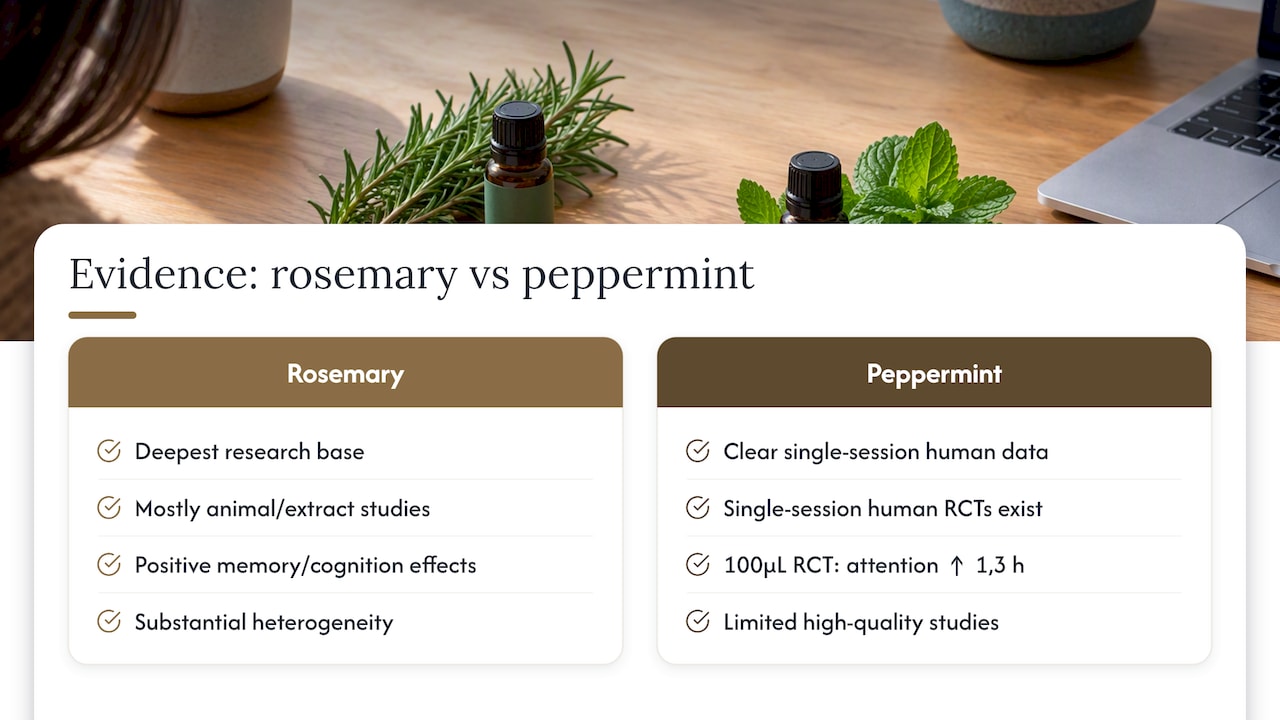
The practical takeaway: these oils show promise, particularly rosemary and peppermint, but neither has robust, repeated, large-scale human trials behind it. Treat them as a low-risk addition to your routine rather than a proven cognitive tool.
Some companies emphasize sustainable, ethical cultivation rooted in traditional agricultural practice and offer aromatherapy consultations to help individuals choose oils and dilution ratios suited to their needs. Aromatherapy works best alongside, not instead of, standard medical guidance for any cognitive or clinical concern.
— abdelmuhsen
Try Palinova’s oils and build a starter focus blend
Palinova’s essential oils collection offers a practical starting point if you want to try rosemary or peppermint without guessing at ratios. A single-origin oil lets you learn how your own body responds before blending.

-
Start with one oil, rosemary or peppermint, before building a custom blend.
-
Consider consulting a professional to get help with dilution and blend selection suited to your routine.
-
Browse the full Palinova storefront for single oils and curated sets.
Primary sources and authoritative guidance
For readers who want to go deeper, an independent overview of essential oil evidence and safety rounds out the clinical and regulatory sources cited throughout this guide, alongside the FDA and poison control resources linked above.
Sources
FAQ
What essential oil is best for focus?
Rosemary has the strongest research base among focus-related oils, with studies linking its 1,8-cineole content to improved memory and attention. Peppermint is a close second, with a controlled trial showing improved attention-task performance and reduced fatigue at a higher dose.
What essential oil helps with ADHD?
No essential oil is approved or proven to treat ADHD, and the FDA has not evaluated aromatherapy products for this use. Some people use rosemary or peppermint alongside standard ADHD care for a general alertness effect, but this should never replace a clinician’s guidance.
Which scent is best for focus?
Rosemary and peppermint have the most direct research support, while citrus scents like lemon and bergamot are commonly used for short bursts of alertness. The right choice often depends on whether you need sustained concentration or a quick mental reset.
Which oil is best for ADHD?
There isn’t a scientifically established “best” oil for ADHD, and claims suggesting otherwise go beyond what current research supports. Anyone considering aromatherapy as a complement to ADHD management should discuss it with a healthcare provider first, since oils can interact with sensitivities or medications.
Recommended
Preguntas frecuentes
What essential oil helps with ADHD?
No essential oil is approved or proven to treat ADHD, and the FDA has not evaluated aromatherapy products for this use. Some people use rosemary or peppermint alongside standard ADHD care for a general alertness effect, but this should never replace a clinician's guidance.
Which oil is best for ADHD?
There isn't a scientifically established "best" oil for ADHD, and claims suggesting otherwise go beyond what current research supports. Anyone considering aromatherapy as a complement to ADHD management should discuss it with a healthcare provider first, since oils can interact with sensitivities or medications.