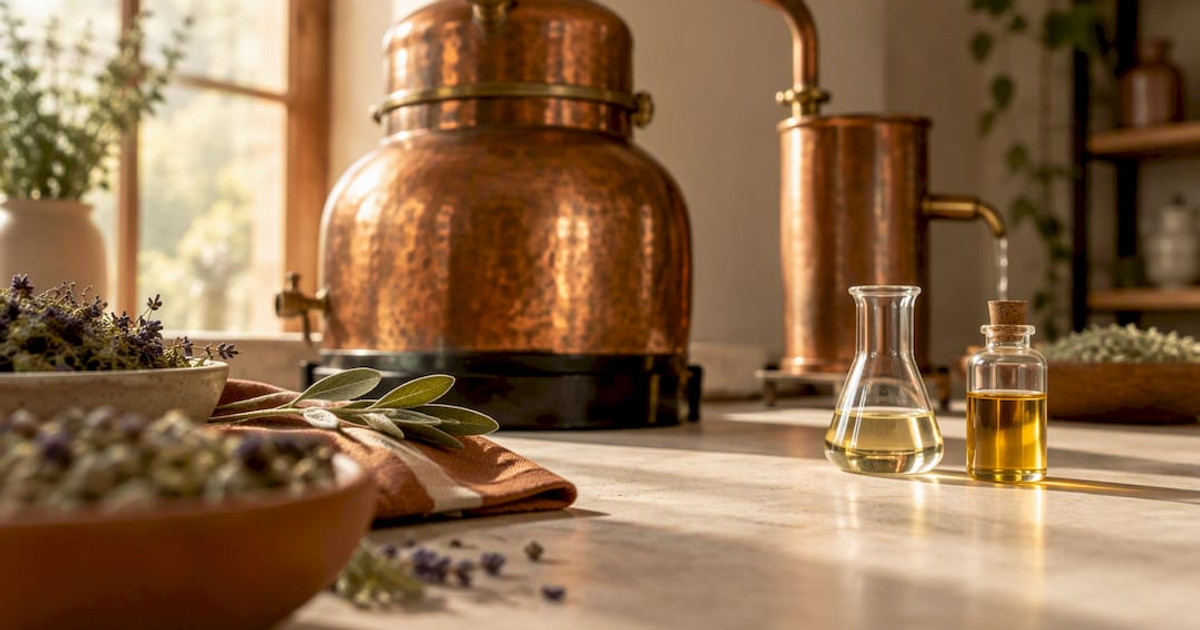

Essential oils are plant-extracted botanical concentrates; fragrance oils are manufactured aroma blends built from isolates and synthetic aroma chemicals. Choose an essential oil when you need botanical authenticity, a natural-label claim, or true aromatherapy properties. Choose a fragrance oil when you need scent strength, an impossible-in-nature note like “sugar cookie,” or reliable candle throw.
TL;DR:
-
Genuine essential oils list the Latin plant name, extraction method, and come from small bottles stored in amber or cobalt glass, with batch numbers for traceability.
-
Fragrance oils are synthetic blends labeled simply as “fragrance,” often in plastic bottles, and are formulated for stronger scent throw and consistent performance.
-
Real essential oils are only obtained through distillation or cold pressing, and their chemical profile varies based on species, region, and harvest time, with lab testing needed to detect adulteration.
-
Fragrance oils usually dominate in scent strength and longevity in products like candles and soaps due to engineered volatility, while essential oils are preferred for authenticity and therapeutic use.
-
Verify oil purity through batch-specific certificates, GC-MS analysis, and sensory comparison, considering sourcing transparency and asking for detailed documentation from suppliers.
Table of Contents
Quick Checklist: Spotting a Fragrance Oil vs an Essential Oil
Before you read another paragraph of theory, scan the label in your hand. A few seconds of label-reading catches most fakes.
-
A genuine essential oil lists the Latin plant name (Lavandula angustifolia, not just “lavender”), the plant part used, and the extraction method.
-
Dark amber or cobalt glass, a batch or lot number, and modest bottle sizes point toward a real single-origin oil.
-
Plastic bottles, no Latin name, and the word “fragrance” or “perfume oil” on the front label almost always means synthetic.
-
Any aroma that plants cannot produce, think birthday cake, blue raspberry, “clean linen”, is a fragrance oil by definition.
-
Price extremes cut both ways: a $4 bottle of “rose oil” is fake, but so is a wildly inflated price with no batch documentation to justify it.
What Makes an Oil a True Essential Oil?
An essential oil, in the strict sense pharmacopeias and industry standards use, comes only from steam distillation, hydrodistillation, or cold expression (for citrus peels) of a single plant material. Anything pulled out with solvents and called an “absolute” or “CO2 extract” sits in a related but chemically distinct category. That distinction matters because the extraction method shapes the entire chemical fingerprint of the oil.
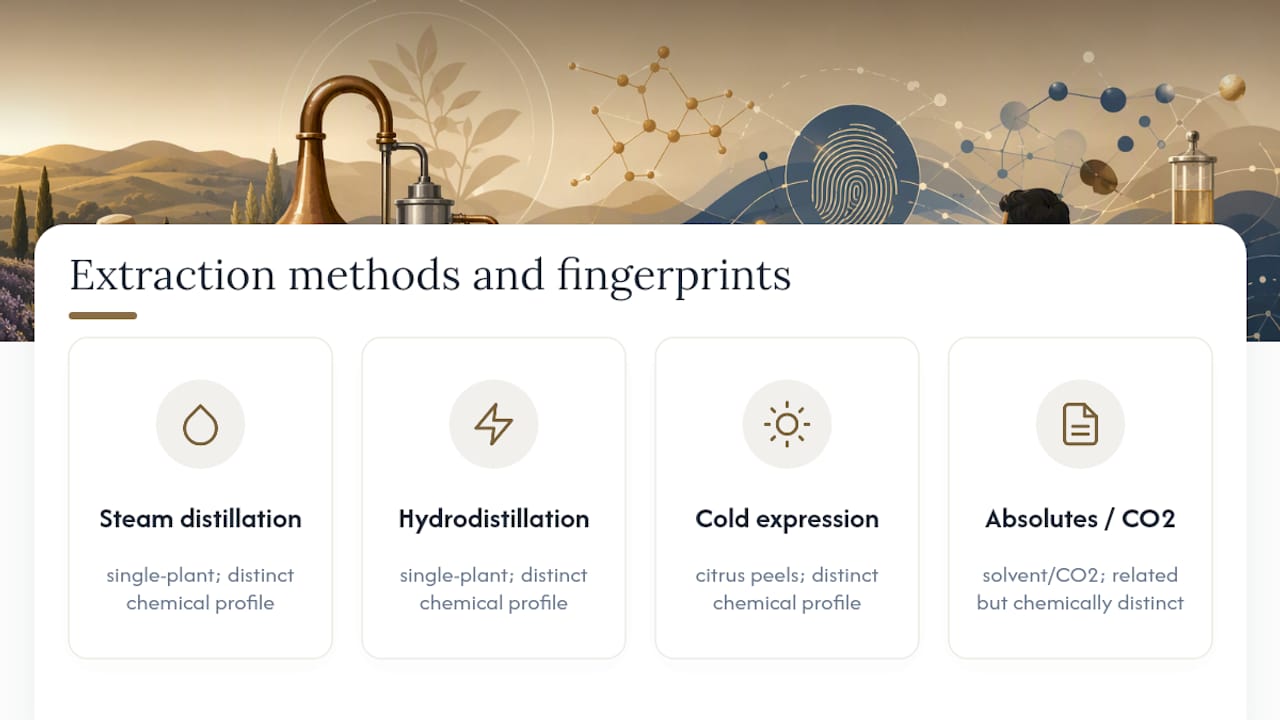
Species, the specific plant part used, growing region, and even harvest timing change the ratio of aromatic compounds an oil contains. Two bottles labeled “rosemary oil” can smell and perform noticeably differently depending on whether the plant grew in Morocco or Provence. That variability is exactly why adulteration is common and hard to catch with your nose alone. Labs rely on GC-MS and enantiomeric analysis to separate a genuine plant profile from one that’s been stretched with cheaper oils or synthetic “nature-identical” molecules. Origin and species aren’t marketing fluff; they’re the variables a lab checks first.
What Fragrance Oils Actually Are
A fragrance oil is a formulated blend, aroma chemicals, molecular isolates, and sometimes a percentage of essential oils, mixed to hit a specific scent profile on paper. Perfumers build them the way a chemist builds a compound: start with a target smell, then layer synthetic and natural materials until the blend matches it consistently, batch after batch.
That engineering is precisely why fragrance oils can replicate scents no plant on earth produces, and why they perform more predictably than botanicals in things like soap curing or candle burning. On an ingredient label, though, a fragrance oil typically shows up as a single word: “fragrance.” Cosmetic labeling rules allow that because manufacturers can protect their formulas as trade secrets, and the FDA holds the company responsible for the safety of whatever is inside that one word.
Do Fragrance Oils Smell Stronger Than Essential Oils?
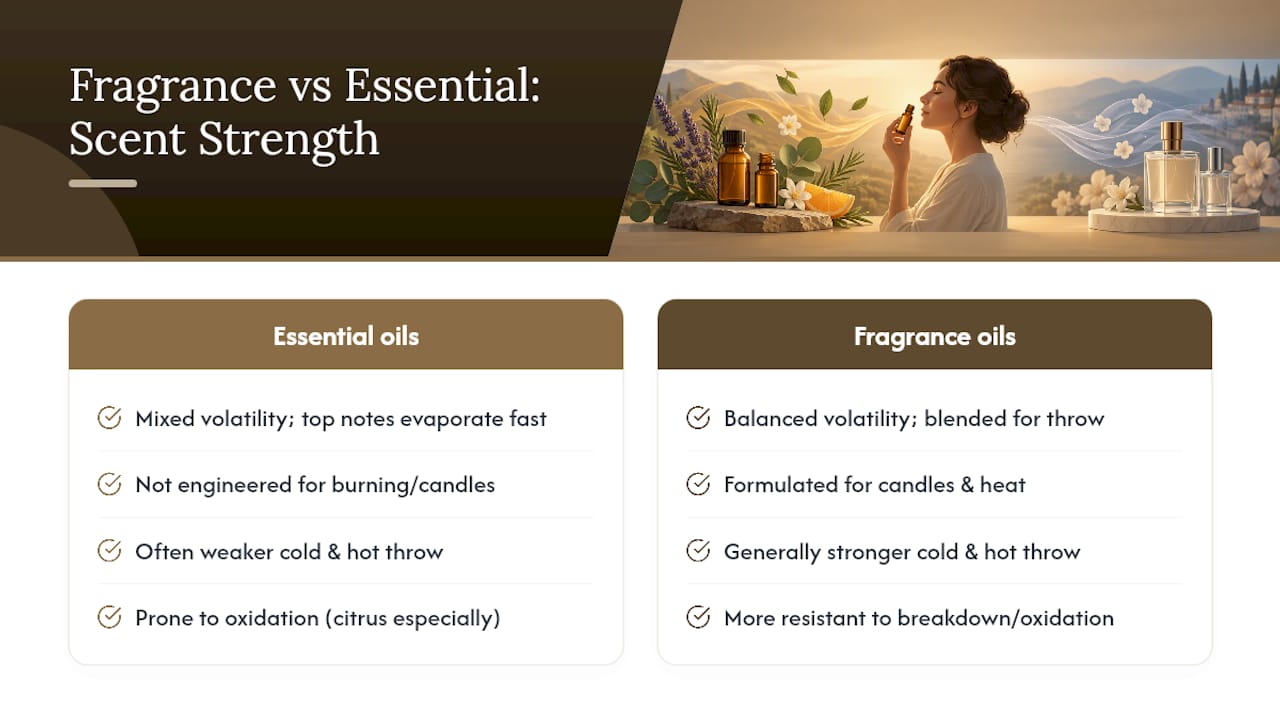
Usually, yes, and the reason is chemistry, not marketing. Essential oils contain a spread of volatility classes: top notes like citrus terpenes evaporate within minutes, while heavier constituents linger. A lot of essential oils were never engineered with burning or candle-making in mind, so their scent can fade fast or behave unpredictably once heat is involved.
Fragrance oils are formulated for balanced volatility on purpose. Chemists blend faster and slower-evaporating molecules to control how a scent unfolds, which is why fragrance oils generally deliver stronger cold throw and hot throw in candles than most essential oils do. Oxidation is the other wildcard: essential oils rich in terpenes, citrus oils especially, oxidize with light and air exposure, and oxidized oil raises sensitization risk even though the bottle still says “pure.” Some fragrance oils include stabilizers specifically to resist that kind of breakdown.
Before committing to a full batch of soap or candles, run a small-scale trial: pour a test candle, do a blotter-strip aging test over a few days, and compare a fresh sample against one that’s sat open for a week. The difference tells you more than any label claim.
Is It Legal to Sell Products With Fragrance Oils?
Yes, selling fragrance oil products is legal in the United States, but labeling and concentration limits still apply. The FDA doesn’t have a formal definition of “essential oil,” and it regulates based on intended use rather than ingredient origin. A lavender oil marketed to “cure anxiety” gets treated as a drug claim, while the same oil sold as a fragrance component gets treated as a cosmetic.
“Natural” is not a safety guarantee. Reviews of essential oil chemistry note that both natural and synthetic fragrance materials carry documented allergenicity and toxicity risks depending on concentration and exposure. That’s where IFRA comes in: IFRA Standards set global usage limits for specific fragrance constituents, whether they originate from a synthetic chemical or a botanical extract, and reputable suppliers should be able to hand over conformity information on request.
-
Linalool, limonene, and citral are common sensitizers found in both natural and synthetic materials, so patch-test any new oil before scaling a formula.
-
Store oils away from heat and light in dark glass to slow oxidation and preserve shelf life.
-
Follow dilution guidelines for topical products rather than eyeballing percentages.
One figure worth remembering: essential oils are exempt from FDA pre-market approval as cosmetic ingredients, but that exemption doesn’t extend to any therapeutic claim printed on the label, which is where most amateur brands get into legal trouble.
How Can You Tell if an Essential Oil Is Pure?
Verification is a layered process, not a single test. Start cheap and sensory, then escalate to paperwork and lab data if something still feels off.
-
Ask for the Certificate of Analysis (COA) tied to the specific batch you’re buying, not a generic one from the product page. A real COA includes GC-MS results showing the expected chemical markers for that species.
-
Check for absent or extra peaks. A lab report for lavender oil, for instance, should show linalool and linalyl acetate in expected ratios; unexplained synthetic markers or a flat, oversimplified chromatogram is a red flag.
-
Reject anything with vague labeling on sight. No Latin name, no extraction method, a plastic bottle, or the word “fragrance” buried in the ingredients means you’re not looking at a pure essential oil regardless of what the front label claims.
-
Run a sensory comparison. Put a drop on a blotter strip next to a verified sample from a trusted source and compare how the scent develops over 10, 30, and 60 minutes. Fragrance oils often smell flat or one-dimensional as they dry down; real essential oils shift.
-
Escalate to lab testing when money or health is on the line. Chiral GC-MS and enantiomeric ratio analysis catch synthetic additions that a standard GC-MS pass might miss, and full quantitative analysis is the only reliable way to detect dilution with a cheap carrier like vegetable oil.
Pro Tip: Keep a small “reference library” of oils you’ve already verified through a COA. Comparing a new purchase against your own known-good sample on a blotter strip is faster and often more revealing than trusting a stranger’s online review.
Buyers looking for a deeper walk-through of what a legitimate GC/MS report should contain can use this buyer checklist for verifying essential oil quality as a starting reference.
Which Oil Should You Use for Your Project?
Match the material to the job, not the other way around.
-
Reach for fragrance oils when you’re pouring candles or making bath bombs and need strong, reproducible scent throw, especially for gourmand or novelty notes no plant produces.
-
Reach for essential oils when the finished product is marketed as natural, used for topical skincare, or intended for actual aromatherapy benefit, where botanical authenticity is the whole point.
-
Blending both is common: a small percentage of essential oil layered into a fragrance oil base can round out a “natural” top note, but test the combination in a small batch before scaling production.
-
On finished-good labels, declare “fragrance” honestly when you use a fragrance oil, and check IFRA guidance for maximum usage percentages in your product category before you sell anything.
Skincare makers weighing whether a fragrance oil belongs in a formula at all should also read when to avoid fragrance in skincare before finalizing a recipe.
Why Sourcing Transparency Matters More Than the Label
Most of the fraud in this industry doesn’t happen at the bottling stage, it happens further up the supply chain, where a distiller quietly stretches a rare oil with a cheaper one nobody downstream can detect without lab equipment. That’s the uncomfortable truth conventional buying guides skip: a pretty label and a Latin name aren’t proof of anything if the supplier can’t produce a batch-specific COA on request.
Palinova sources its essential oils and seed oils directly from growers, focusing on single region botanicals rather than blending stock from various sources. That’s not a claim you can verify from a bottle either, which is exactly why we point every reader back to the same standard we’d apply to ourselves: ask for the documentation, check the batch number, and treat “trust me” from any brand, including ours, as a starting point rather than an answer. Readers who want to go deeper on origin-based verification can read more on why plant origin matters.
— abdelmuhsen
Get Verified, Single-Origin Oils From Palinova
Most fragrance oil sellers can’t tell you what farm, region, or extraction method produced their scent, because there isn’t one. Some sellers provide traceability to a specific botanical source instead of a lab formulation sheet.
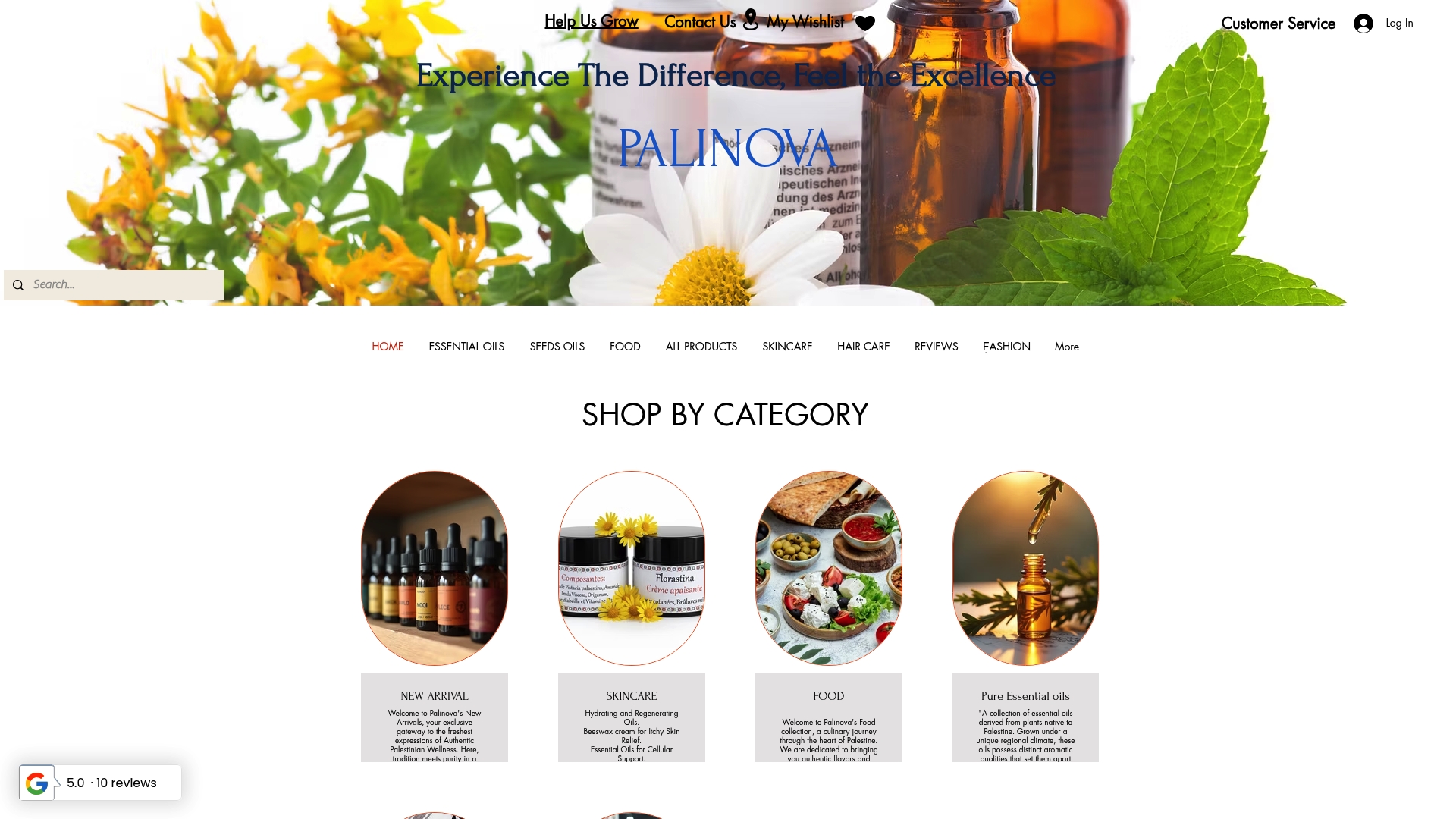
Palinova’s essential oils, seed oils, and skincare lines are all rooted in that same sourcing standard, with batch documentation available to customers who want to verify what they’re buying before they commit a formula to it. If you’re curious about a specific botanical, the Achillea Fragrantissima essential oil is a good example of a single-origin oil most fragrance counters simply can’t replicate. Have a skincare or aromatherapy question first? Free consultations are offered to help match an oil to your actual need rather than a marketing claim. Browse the current catalog and request batch details on any product page.
Where to Verify the Claims in This Article
Regulatory and safety questions deserve primary sources, not secondhand summaries.
-
The FDA’s fragrance and cosmetics guidance explains labeling rules and why manufacturers, not the agency, verify ingredient safety.
-
IFRA’s Standards portal lists usage limits for fragrance constituents found in both synthetic and natural materials.
-
The peer-reviewed case study on essential oil adulteration walks through real detection methods for lavender, lemon, and tea tree oil fraud.
Sources
FAQ
How Can You Tell if an Essential Oil Is 100% Pure?
Check the label for the Latin plant name, extraction method, and plant part, then request a batch-specific Certificate of Analysis with GC-MS results. A pure oil’s chromatogram matches known reference ratios for that species; unexplained synthetic peaks or missing expected markers signal adulteration.
How Do You Tell if Essential Oils Are High Quality?
Quality shows up in sourcing transparency: a named growing region, a specific harvest or extraction detail, and a supplier willing to share lab documentation on request. Dark glass packaging and consistent batch-to-batch scent, verified against a known-good sample, are practical everyday indicators.
Can You Substitute Fragrance Oil for Essential Oil?
You can substitute one for the other in many crafting projects, but not interchangeably for every purpose. Fragrance oils work well for candles and soaps where scent strength matters, while essential oils are the better choice for aromatherapy or products marketed as natural, since fragrance oils don’t carry the same botanical origin or therapeutic history.
What Smells Stronger, Fragrance Oil or Essential Oil?
Fragrance oil generally smells stronger and lasts longer once burned or applied, because it’s formulated for balanced volatility and consistent scent throw. Essential oils vary more, with some top notes fading within minutes depending on the plant and extraction method.
Does Palinova Sell Essential Oils With Documentation Available?
Yes, Palinova offers single-origin essential oils and seed oils sourced from Palestinian growers, with batch documentation available to customers who request it. Pricing for individual products is listed on the Palinova shop rather than fixed publicly across the whole catalog.
Recommended
Frequently Asked Questions
How Can You Tell if an Essential Oil Is 100% Pure?
Check the label for the Latin plant name, extraction method, and plant part, then request a batch-specific Certificate of Analysis with GC-MS results. A pure oil's chromatogram matches known reference ratios for that species; unexplained synthetic peaks or missing expected markers signal adulteration.
Can You Substitute Fragrance Oil for Essential Oil?
You can substitute one for the other in many crafting projects, but not interchangeably for every purpose. Fragrance oils work well for candles and soaps where scent strength matters, while essential oils are the better choice for aromatherapy or products marketed as natural, since fragrance oils don't carry the same botanical origin or therapeutic history.
What Smells Stronger, Fragrance Oil or Essential Oil?
Fragrance oil generally smells stronger and lasts longer once burned or applied, because it's formulated for balanced volatility and consistent scent throw. Essential oils vary more, with some top notes fading within minutes depending on the plant and extraction method.