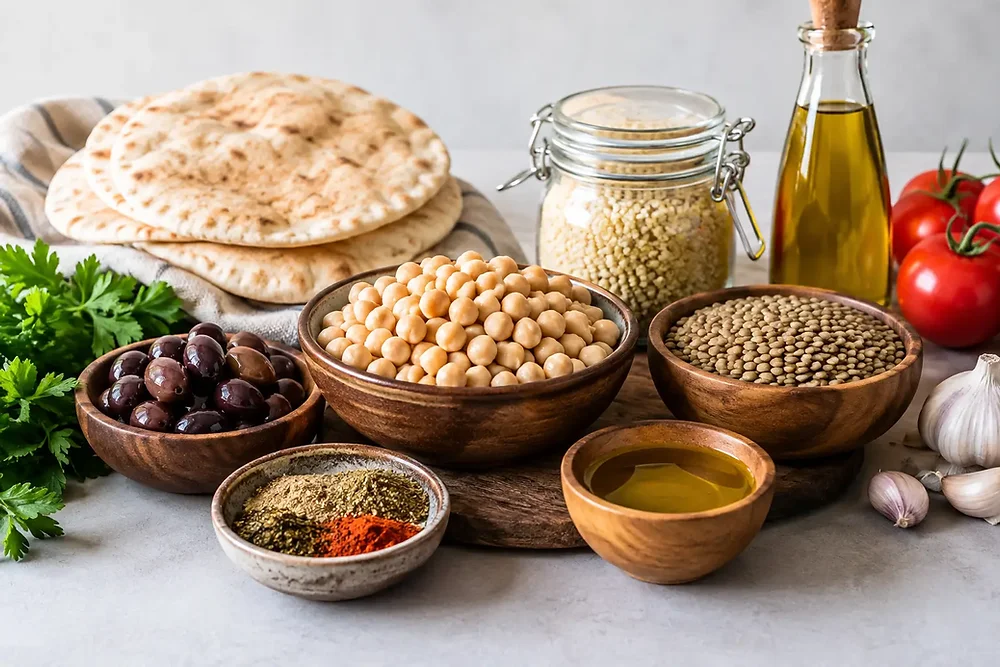
A good pantry does more than make dinner possible. It gives you a dependable way to bring depth, brightness, and comfort to an ordinary plate. The best Palestinian pantry staples do exactly that: a few potent ingredients, shaped by a generous food culture and a deeply rooted agricultural tradition, can turn eggs, grains, vegetables, and bread into something memorable.
These are not novelty ingredients to use once and forget. Palestinian staples are built for repetition. They belong beside the stove, on the breakfast table, and within reach when a meal needs acidity, herbaceous warmth, fruitiness, or a final spark of flavor. Their power lies in both provenance and practicality.
What Makes Palestinian Pantry Staples Distinct?
Palestinian cooking is often guided by contrast: peppery olive oil against soft bread, tart sumac over creamy yogurt, fragrant za’atar with fresh cucumber and tomato. The landscape itself gives these ingredients their character. Hillside groves, dry summers, mineral-rich soils, and generations of careful cultivation produce flavors that feel concentrated without needing to be loud.
For a well-stocked kitchen, quality matters more than quantity. Choose ingredients with clear origins, minimal processing, and a fresh aroma. Sumac should smell tangy and berry-like, not dusty. Za’atar should be green, aromatic, and alive with wild herbs. Extra-virgin olive oil should taste fruity, grassy, or gently peppery rather than flat. These details are not preciousness. They are the difference between a pantry item that disappears into food and one that carries a meal.
9 Best Palestinian Pantry Staples for Everyday Cooking
1. Extra-Virgin Olive Oil
Palestinian extra-virgin olive oil is the foundation. Its flavor can range from buttery and ripe to green and peppery, depending on the olive variety, harvest timing, and region. Use it where its character remains present: over labneh, grilled vegetables, lentil soup, beans, salads, or warm bread.
It also earns its place beyond the plate. Olive oil has long been part of Mediterranean self-care rituals, valued as a simple, plant-based option for softening dry hands, cuticles, and hair ends. For culinary use, keep it away from heat and light to preserve its fresh flavor.
2. Za’atar
Za’atar is the pantry staple that most quickly changes the feeling of a meal. In Palestinian kitchens, the blend commonly brings together wild thyme or Origanum syriacum, sesame seeds, sumac, and salt. Every family and producer may balance it differently, which is part of its beauty.
Stir it into olive oil for bread, scatter it over eggs, fold it into yogurt, or use it as a rub for chicken, fish, squash, and potatoes. Its herbal, nutty, tart profile also works beautifully in a vinaigrette. If you are new to it, start with a small pinch. A well-made blend carries remarkable intensity.
3. Sumac
Sumac brings the bright, mouthwatering acidity that many cooks reach for with lemon. Made from ground red berries, it has a deep crimson color and a tart flavor that is fruity rather than sharply sour. It is especially useful when you want a dry seasoning instead of extra liquid.
Dust it over hummus, onions, roasted cauliflower, rice, avocado toast, or a simple salad of tomatoes and cucumbers. Mix it with olive oil and a little salt for a quick dip. Sumac is also a graceful finishing touch for richer foods, where its tang cuts through creaminess and fat.
4. Maftoul
Often described as Palestinian couscous, maftoul is larger and more textured than the fine couscous many American cooks know. Traditionally hand-rolled from bulgur and wheat flour, it has a warm, nutty taste and a satisfying bite.
Serve it beneath roasted vegetables or braised chicken, or build a grain bowl with chickpeas, herbs, cucumbers, and a sumac-forward dressing. Maftoul does need a little more attention than instant couscous, but that is its advantage: it holds up well and brings real structure to a meal.
5. Freekeh
Freekeh is young green wheat that is harvested, roasted, and rubbed, creating a grain with a faintly smoky aroma and a hearty chew. It is ideal for people who want a more substantial alternative to rice without losing the comfort of a warm grain dish.
Cook it in broth with onions and olive oil, then finish with toasted nuts, parsley, and lemon. It is equally good in soups and stuffed vegetables. Because it contains wheat, it is not appropriate for gluten-free diets, but it is a deeply flavorful choice for anyone who enjoys whole grains.
6. Arabic Coffee
Arabic coffee is less about rushing through caffeine and more about making a pause feel intentional. It is often finely ground and gently spiced with cardamom, producing a pale, aromatic cup that is traditionally served in small portions.
Its gentle bitterness and floral spice pair beautifully with dates, dark chocolate, or a piece of fruit. Keep it sealed tightly once opened so the cardamom remains vivid. For many households, coffee is not merely a beverage staple. It is a gesture of welcome.
7. Black Seed
Black seed, also known as nigella, is small, dark, and pleasantly pungent, with notes that can suggest onion, oregano, and toasted pepper. It has a long history in regional food and traditional wellness practices, but its easiest entry point is the kitchen.
Sprinkle it over flatbread, eggs, roasted carrots, or savory yogurt. Stir it into salad dressings or add a pinch to pickles. A little goes a long way, so buy it in modest amounts and keep it tightly sealed. Its aromatic oils are part of what makes it so distinctive.
8. Tahini
Tahini is a silky sesame paste with a gentle bitterness and savory richness. It is essential for hummus, but stopping there would be a loss. Thin it with lemon juice, garlic, water, and salt for a sauce that belongs on roasted vegetables, grain bowls, falafel, and grilled fish.
It also moves easily into sweet preparations. Blend it with dates for a simple spread, or add it to brownies and cookies for a nutty, sophisticated edge. Natural separation is normal, so stir thoroughly before using.
9. Dried Chickpeas and Lentils
No Palestinian pantry feels complete without legumes. Chickpeas and lentils are economical, nourishing, and endlessly adaptable, forming the backbone of soups, stews, salads, spreads, and rice dishes. They are also the ingredients that make a small amount of olive oil, sumac, or za’atar go further.
Use chickpeas for hummus or a warm salad with herbs and onions. Use brown or green lentils with caramelized onions and rice, then finish generously with olive oil. The most satisfying pantry cooking often begins here: humble staples, patiently prepared, then lifted by a few exceptional seasonings.
How to Build a Palestinian Pantry Without Overbuying
Start with three essentials: extra-virgin olive oil, za’atar, and sumac. Together, they cover richness, herbaceousness, and acidity. From there, add Arabic coffee if you value a daily ritual, or choose maftoul and freekeh if you want satisfying foundations for weeknight meals.
Storage protects your investment. Keep olive oil in a cool, dark cupboard. Store herbs, spices, coffee, and seeds in airtight containers away from the stove, where heat and steam dull their aroma. Buy grains and legumes in amounts you will use within a few months, especially if pantry space is warm.
For a pantry rooted in Palestinian heritage, provenance deserves attention. Ingredients connected to a specific land, harvest, and community carry more than flavor. They reflect the hands, knowledge, and resilience behind every jar, tin, and packet. PALINOVA brings this spirit into everyday rituals through Palestinian botanicals and culinary goods chosen for purity, potency, and a meaningful connection to the land.
Keep these staples close, not for special occasions alone, but for the quiet meals that sustain you. A warm piece of bread with olive oil and za’atar, a bowl of lentils finished with sumac, or coffee shared after dinner can make the everyday feel both grounded and generous.